
This simple circuit makes an LED blink to the rhythm of the music of small stereos such as portable radios, recorders, MP3, etc. The circuit works with 4 common batteries that will have good durability, since the consumption is low.
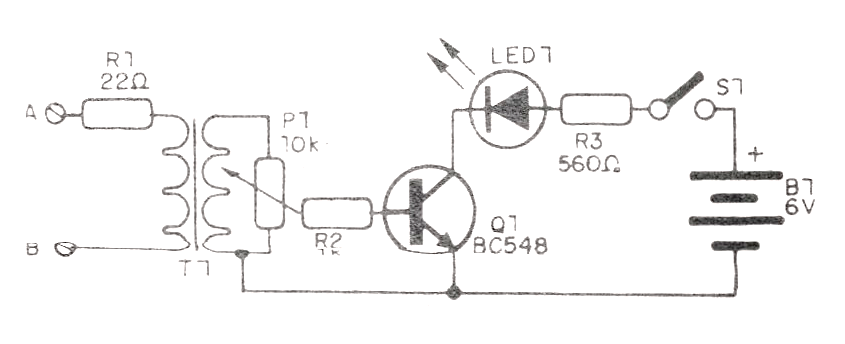
The potentiometer has the purpose of adjusting the signal level so that the LED lights up as desired. For each volume on the stereo, we must readjust this potentiometer. In figure 1 we have the complete diagram of the apparatus.
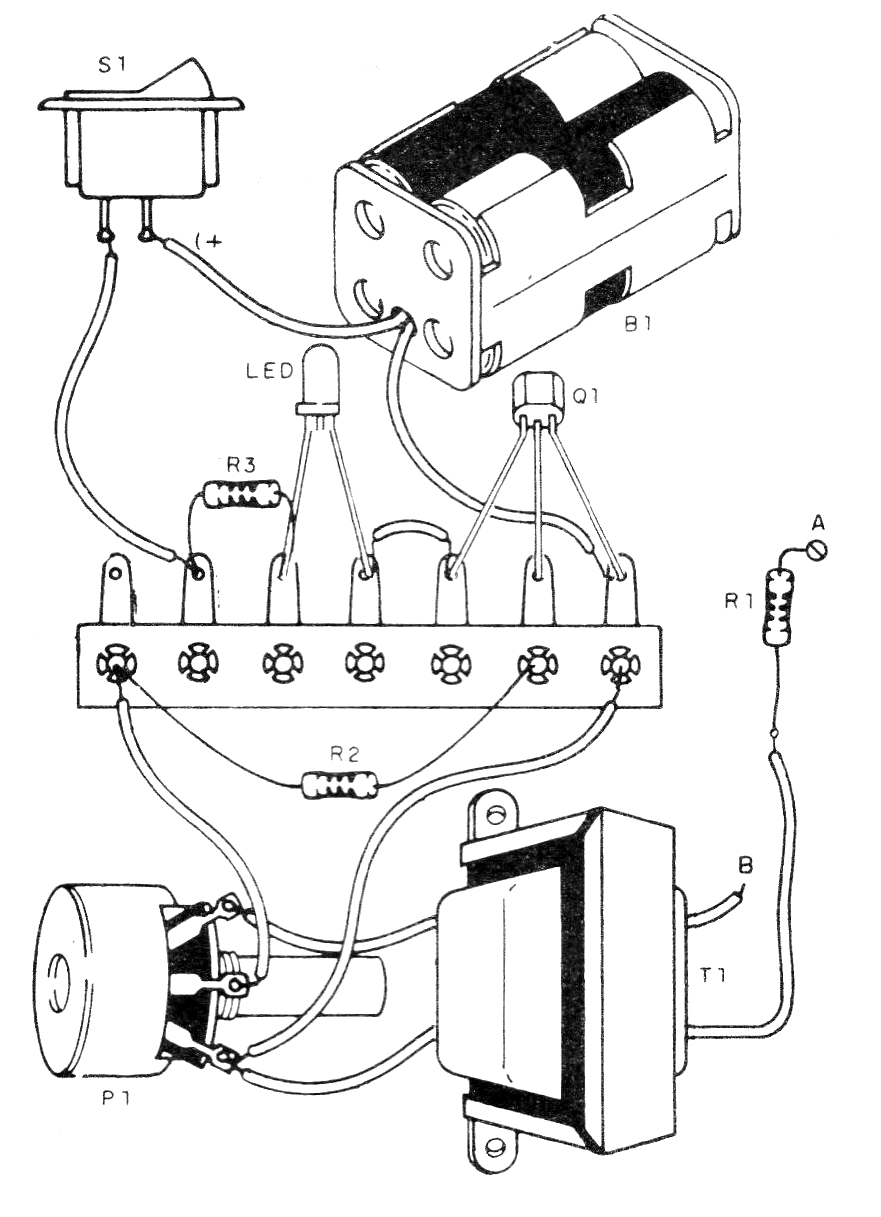
In figure 2 we have the assembly based on a small terminal bridge.
The transformer can be a small transformer used in a primary source of 110 V or 220 V and a secondary one of 5 to 12 V with a current of 50 to 250 mA. The resistor R1 depends on the power of the sound, being able to have values between 10 ohms and 100 ohms. This resistor must be obtained experimentally.
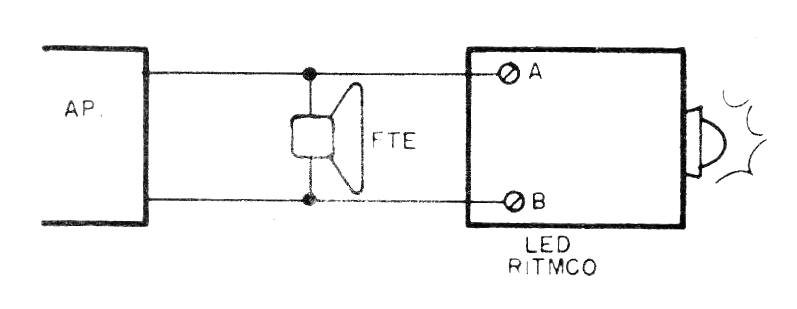
The circuit connection is made as shown in figure 3.
Material list
Q1 - BC548 - NPN general purpose transistor
T1 - Transformer - see text
B1- 6 V - 4 small batteries
S1- On-Off switch
P1 - 10 k ohms or 22 k ohms - potentiometer
R1 - 22 ohms x / 8 W- resistor - red, red, black
R2 - 1k ohms x 1/8 W- resistor - brown, black, red
R3 - 560 ohms x 1/8 W- resistor - green, blue, brown
Miscellaneous: terminal strip, battery holder, mounting box, wires, solder, etc.


